



















Join Yves de Contades explore the best places to travel this autumn by Yacht
Autumn is the true connoisseur’s season for yachting, and I say this as a man who has spent enough time squinting at tide tables to know the difference between a season that photographs well and a season that sails well. Summer in the Mediterranean is for people who enjoy paying triple for a mooring next to a stag party from Miami.
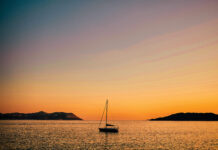
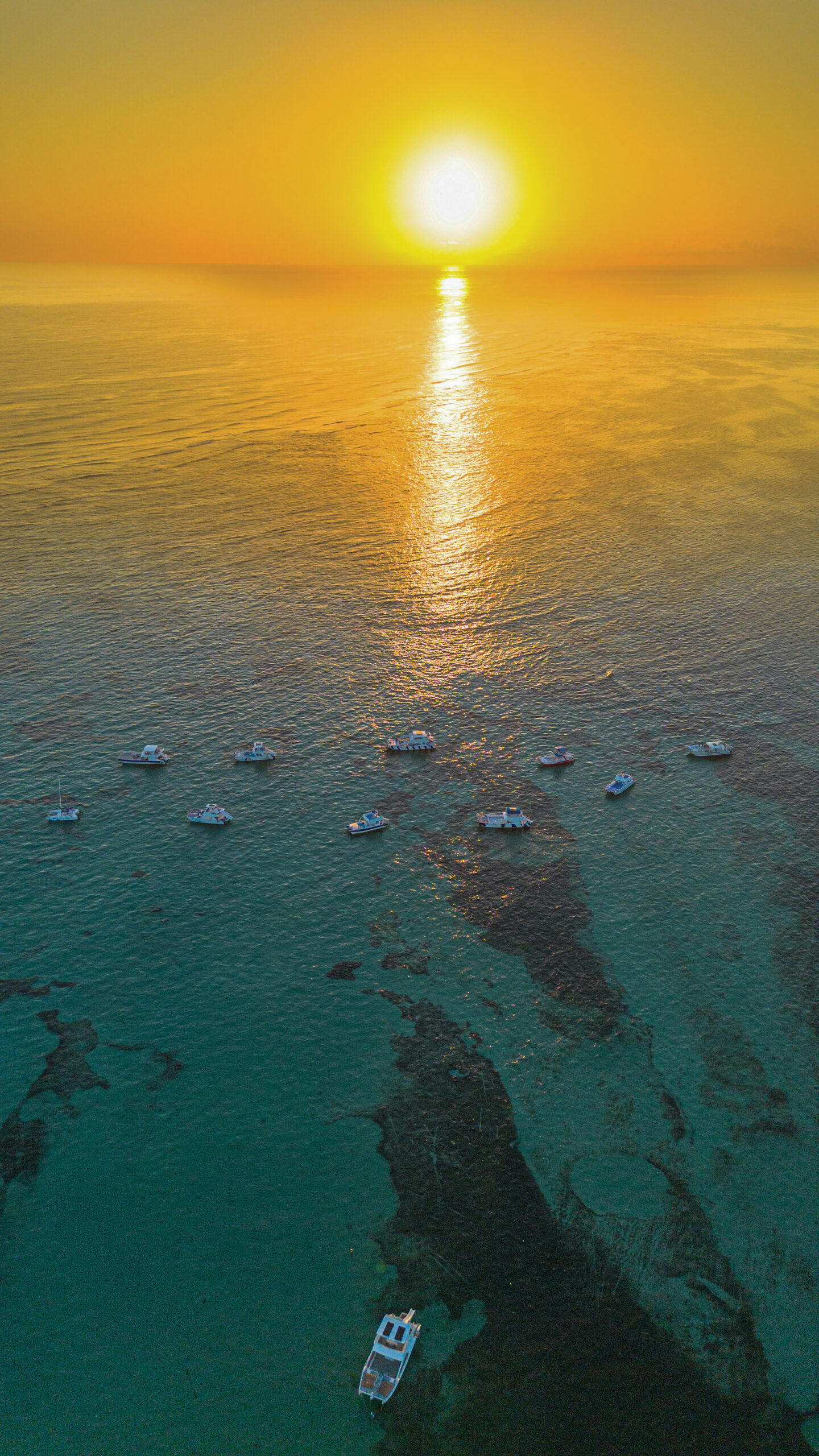
Autumn is for people who actually like boats. The light goes long and gold, the water empties of everyone who thought a superyacht was a nightclub with a keel, and the whole business becomes, once again, about the sea. Chasing the last sun of the year across the Med, the Indian Ocean and North America answers a pull sailors have always recognised, what the French call l’appel du large, the call of the open water. It is, “Le But”.
THE MEDITERRANEAN:
LAST LIGHT ON PORT HERCULE
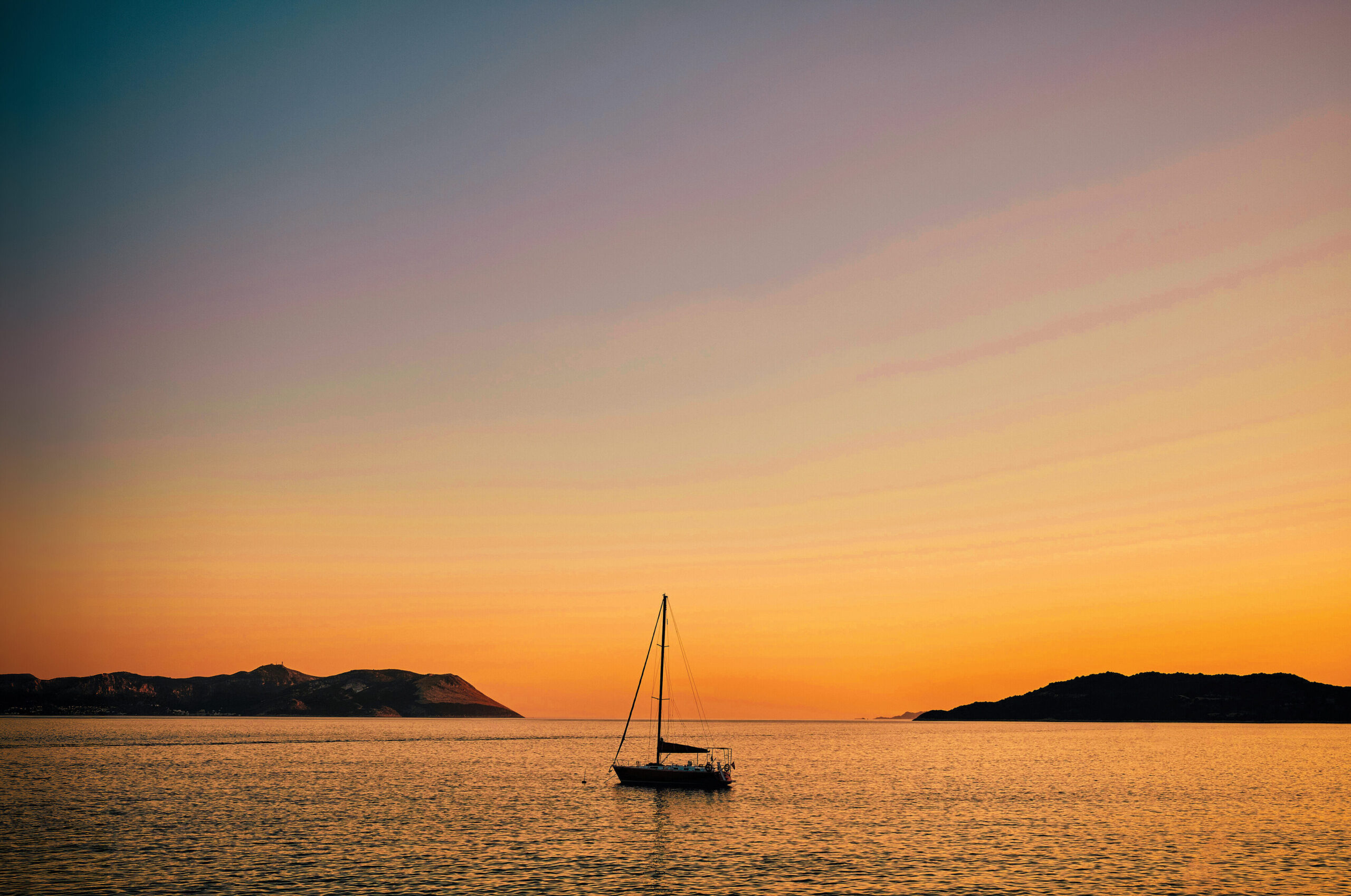
There is a particular quality to the Med in late September, when the crowds have gone home and the water has that flat, syrupy stillness that makes even a modest 40 footer look like something out of a Slim Aarons print. This year the season’s proper full stop comes with the Monaco Yacht Show, running from the 23rd to the 26th of September at Port Hercule, where something in the region of 500 exhibitors and well over a hundred superyachts will crowd the quay in a display of naval ambition that makes the average boat jumble look positively monastic. I’ve been enough times now to have developed a small ritual: arrive on the Thursday, avoid anything described as a “Sapphire experience” unless someone else is paying, and find an unglamorous café on the Rocher from which to watch several hundred million euros of gleaming hull bob about like very expensive rubber ducks.
But Monaco is the exclamation mark, not the sentence. The real autumn cruising happens in the fortnight either side of it, when owners who spent August fending off charter guests finally get their boats back, go toutes voiles dehors, all sails out, and point them somewhere quiet. Corsica in October is a revelation: the maquis has cooled, the anchorages at Cargèse and Girolata are yours alone, and the water, though a degree or two down on August, is still warm enough for a swim that doesn’t require a stiff drink afterwards. Sardinia’s Costa Smeralda, similarly, sheds its Portofino–adjacent pretensions once the season turns, and the Maddalena archipelago becomes a place you might actually want to be rather than merely be seen in.
The trade winds of tourism blow the other way in autumn, and that, mes amis, is precisely the appeal.
A friend who charters out of Antibes tells me his October bookings are almost entirely repeat clients, the sort who have worked out that a Med autumn cruise costs less, crowds less, and photographs rather better than its August equivalent, since nobody wants their infinity pool shot cluttered with jet skis. The season proper tends to close in early November as the mistral starts to have opinions of its own, but the three or four weeks either side of Monaco remain, for my money, the finest sailing the Mediterranean offers all year. Après moi, le déluge, as the mistral itself might say.
The industry’s own calendar bends around this migration south. The Fort Lauderdale International Boat Show, in its 67th edition and still comfortably the largest in–water boat show on earth, runs from the 28th of October to the 1st of November across seven marinas along Fort Lauderdale’s waterfront, a fitting swansong for the northern season and an opening bell for the southern one.
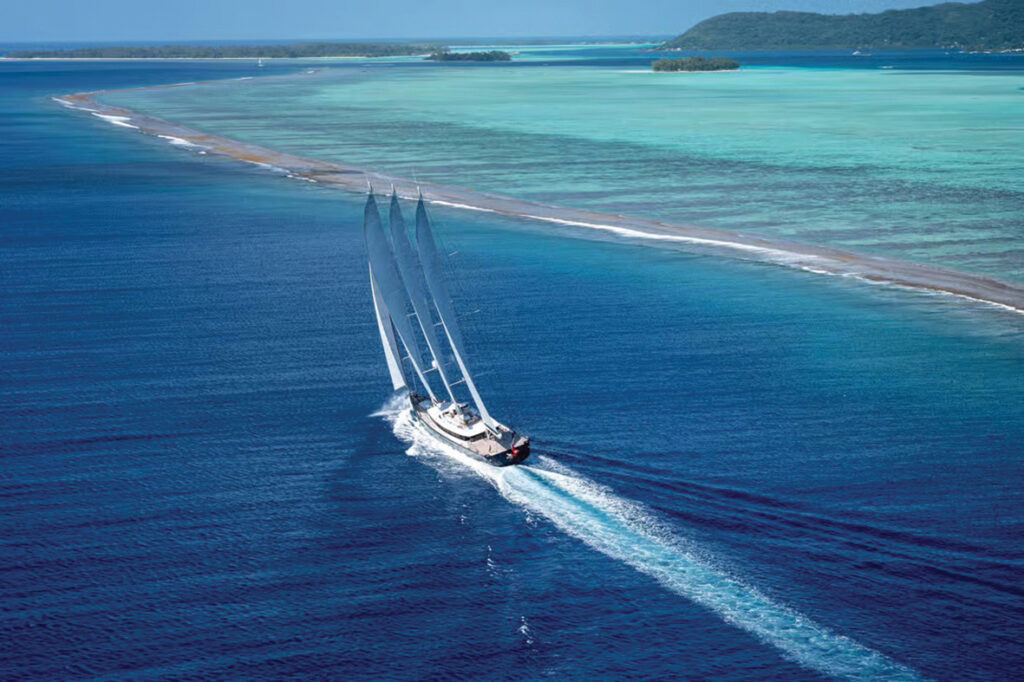
It is not a subtle event: several thousand yachts, many blazers, and wealth that makes the Monaco crowd look understated. It marks the moment the American charter fleet points its bows south, running vent arrière, downwind with purpose, waiting out hurricane season’s end (officially 30 November) before the Leeward and Windward Islands open for winter.
THE INDIAN OCEAN: WHALE SHARKS AND THE CALM BETWEEN MONSOONS
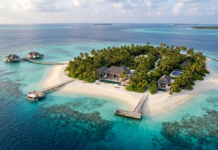
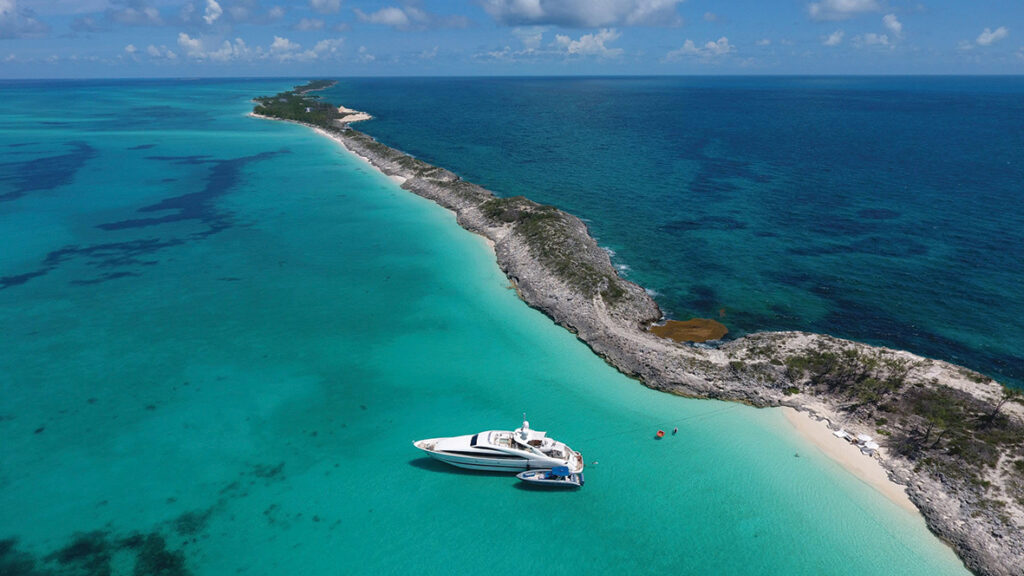
If the Mediterranean is a place you visit to be seen, the Seychelles are a place you visit to disappear, and autumn is when the islands hand you the keys. The archipelago sits neatly outside the cyclone belt, which means it never truly shuts, but the sailing calendar has its own logic: the boisterous southeast trades that stir up the water from June through September finally exhale in October, and what follows is a short, glorious window before the northwest monsoon reasserts itself in late November. Wind speeds settle into the 8 to 15 knot range, the sea flattens into something close to une mer d’huile, a sea of oil as the old salts put it, and visibility underwater becomes almost embarrassingly good.
October has the added charm of being whale shark season, when these vast, gentle creatures gather in numbers around Mahé and Praslin, and there are few finer arguments for chartering a catamaran than the possibility of sliding into the water alongside something the size of a delivery van that wants nothing more from you than to be left alone to feed. I did this once off Coco Island, and can report that nothing quite recalibrates one’s sense of self–importance like being ignored by a fish the length of a cricket pitch.
The itinerary that makes sense in autumn threads Mahé’s Eden Island Marina through Praslin’s Vallée de Mai (that primeval forest of coco de mer palms which looks, frankly, like the set of a film nobody had the budget to finish) and on to La Digue, where the granite boulders at Anse Source d’Argent have achieved a kind of fame that borders on cliché but remains, when you’re standing on the sand rather than looking at someone else’s photograph of it, entirely deserved. Compared with the Maldives, whose flat coral atolls offer a different and rather more minimalist beauty, the Seychelles give the sailor actual topography to play with: granite headlands, forested peaks, a proper mouillage, an anchorage worth the name, rather than a lagoon and a prayer. By November the northwest monsoon begins to make itself known again, so the window is narrow. Seize it. La saison ne dure qu’un instant, but what an instant.
NORTH AMERICA: FOLIAGE, FLIBS, AND THE LONG RUN SOUTH
North America does autumn yachting differently—high praise. While the Med offers heat and the Indian Ocean calm, New England delivers spectacle: a coastline that turns, in weeks, into something closer to a painting than a place.
Cruising Maine or Narragansett Bay in early October, with maples ablaze like a house fire and water still holding summer’s warmth, is a compelling argument for a bareboat charter. It is also far less crowded than the Caribbean by Christmas, and considerably cheaper.
For those unwilling to wait, the Chesapeake in October offers its own quiet rewards: crab shacks, blue herons, and a stillness on the water that Newport, further north, loses to its own social calendar somewhere around Labor Day. The truth about North American autumn sailing is that it rewards patience more than any other region on this list. Rush south too early and you’re still dodging the last tropical systems; linger too long in New England and you’re reefing sails in a nor’easter. Get the timing right, somewhere in that narrow October corridor, and you get the best of both: foliage in the morning, so to speak, and the promise of the tropics by dinner.
Three oceans, three different reasons to go, and a single unifying truth: the crowds that make summer sailing a trial are, by autumn, safely back at their desks. What’s left is the sea as it was presumably intended: warm enough, quiet enough, and entirely without an audience. Book accordingly, tell no one where you’re going until you’re already there, and to whichever ocean you choose, bon vent.
Continue reading the 2026 Autumn / Winter edition with a free digital membership or physical subscription ↓